Imagine goods arriving at your warehouse and reaching the customer just a few hours later — without days of intermediate storage. That’s exactly what’s possible with cross docking in warehousing. This logistics concept is transforming how companies manage material flows, reduce costs, and drastically shorten delivery times.
But what exactly is behind it? Cross docking in warehouses is not just about speed. Instead of storing goods, the transshipment point consolidates them in a targeted way and immediately forwards them to their next destination. How this works, which models exist, and what opportunities and limitations are associated with it — all of this is explained in the following blog post.
Cross Docking in Warehousing Explained Simply
Cross docking describes a logistics concept in which goods largely skip the traditional warehousing process. Instead of remaining in shelves or storage areas for extended periods, they are organized upon arrival so that they can be handed over almost directly for onward transport.
The term “cross docking” originates from the USA and can roughly be translated as “cross the dock.” The first applications appeared in the U.S. trucking industry in the 1930s. The major retail chain Walmart made the concept famous when it successfully used it to streamline its distribution processes.
Cross docking thus forms the foundation for modern supply chain strategies: less storage capacity, lower costs, and a clear focus on speed.
The Transshipment Point as the Heart of Cross Docking
The transshipment point — the so-called cross-docking center — forms the heart of the process. Here, goods arrive from suppliers, employees consolidate them, and then send them on their way almost without stopping. While a traditional warehouse is designed for stockpiling, the transshipment point has a different purpose: it serves purely for short-term handling of goods. It is not a typical storage location but rather a hub that keeps material flows constantly in motion.
Flow of Goods
The typical flow of goods at the transshipment point can be divided into three phases:
- Inbound delivery: Carriers deliver shipments in loading units such as pallets, containers, or mesh boxes to the cross-docking center.
- Sorting and consolidation: Here, goods are divided according to destination regions or end recipients. How extensive this process is depends on the type of cross docking. Some variants require almost no sorting, while others rely heavily on it — more on that shortly.
- Outbound delivery: Employees prepare the goods for dispatch and deliver them directly to the end customers.
This structured process creates a continuous flow of goods that operates without traditional storage.
Role of Loading Units
A central function at the transshipment point is performed by so-called loading units. These are standardized transport carriers — such as pallets, containers, or mesh boxes — that make material handling efficient. They enable companies to move, consolidate, and combine large quantities of goods in a short time. Without loading units, the speed achieved in cross docking would be nearly impossible, as each product would have to be handled individually.
Impact on Storage Space Requirements
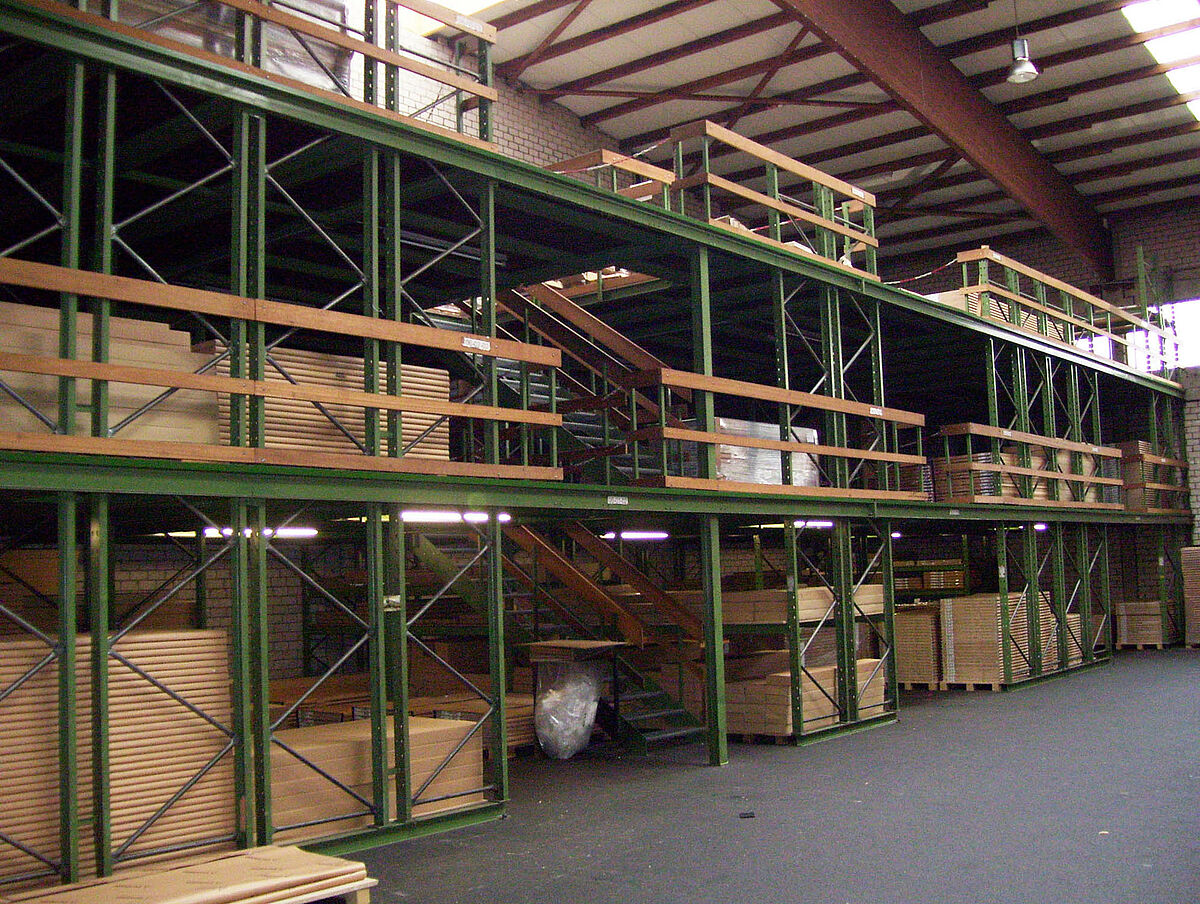
Since goods stay at the transshipment point only for a very short time, the need for traditional storage space is significantly reduced. There is no need to provide extensive storage areas for stockpiling — only temporary zones for direct handling. Nevertheless, short-term storage is sometimes unavoidable, for example, when deliveries do not arrive simultaneously or routes still need to be organized. Here, flexible racking systems help store loading units safely for hours or a few days.
The transshipment point is therefore the heart of cross docking, as it organizes the transition from inbound delivery to the end customer. It replaces large warehouses with efficient material flows and plays a key role in making supply chains faster and more cost-effective.
Types of Cross Docking
Cross docking in warehousing can be divided into different approaches. They mainly differ in whether and to what extent goods are processed or prepared during handling. Generally, there are three main types:
One-Stage Cross Docking
In this model, goods are forwarded directly after delivery without any additional processing. It is mainly used for homogeneous products that are already pre-picked by the manufacturer — for example, palletized beverages or construction materials.
The biggest challenge lies in precisely coordinating delivery and pickup times, as there are no buffers. Flexible racking systems provide the necessary structure to temporarily store, consolidate, and make goods available exactly at the right moment.
Two-Stage Cross Docking
In this process, goods are first broken down, sorted, and possibly assembled into smaller units for various branches or customers at the cross-docking center before being shipped out.
This creates a level of flexibility that is missing in the one-stage model. Retailers often use this model when deliveries from different manufacturers need to be combined to meet the needs of a store in a single shipment.
Multi-Stage Cross Docking
This is the most complex variant. Goods pass through multiple transshipment points where they are split, regrouped, or re-sorted. Typical applications include international supply chains, where goods are transported over long distances and handled several times — for example, in the automotive industry or global e-commerce.
This variant requires particularly powerful IT systems and close coordination among all parties involved. The choice of the right method therefore depends primarily on the products, logistical requirements, supply chain, and an optimal warehouse setup with suitable racking systems.
Advantages and Disadvantages of Cross Docking
Cross docking can significantly streamline logistics processes — but in practice, advantages often come with challenges.
Advantages
- Speed: Material flows move almost uninterrupted through the warehouse. For example, grocery chains use cross docking to ensure fresh products reach stores the same day and quickly reach the end customer.
- Cost efficiency: Cross docking helps streamline logistics processes and reduce operational costs. At the same time, flexible and well-designed racking systems become increasingly important to make optimal use of existing resources.
- Product freshness: Especially in food or pharmaceutical logistics, shorter storage times ensure higher product quality.
- Efficient use of space: Instead of maintaining large warehouses, available space is used for short-term handling and sorting processes.
Disadvantages
- High planning effort: The system requires precise time windows. If delivery and pickup are not synchronized, costly problems can quickly arise.
- Risk of delays: Even one delayed truck can disrupt the process. Goods can pile up, space becomes scarce, and the entire material flow slows down.
- Limited applicability: Products that are difficult to plan, seasonal goods, or items with special storage requirements (e.g., cooling, safety) are only partially suitable, as buffer areas are limited.
The Role of Storage Areas and Racking Systems
In theory, cross docking means: goods arrive and immediately leave again. In practice, however, it’s rarely that simple. Deliveries don’t always arrive simultaneously, picking requires preparation time, and some products need temporary storage.
That’s where racking systems come into play:
Cantilever Racks
In cross docking, there’s often little room for complex temporary storage. But when bulky goods arrive that can’t be immediately shipped, cantilever racks are the solution. Whether steel beams, construction timber, or long plastic pipes — they can be stored temporarily without effort and quickly retrieved. This keeps material flow stable, even when inbound and outbound schedules are not perfectly aligned.
Pallet Racks
When goods arrive on pallets, fast and easy handling is crucial. Pallet racks provide the necessary flexibility: they create temporary space, simplify sorting, and keep pallets ready for the next transport. A must-have for any logistics operation relying on cross docking.
Mobile Racking Systems
For companies with limited storage space, mobile racking systems are the ideal addition to cross docking. They allow flexible buffer zones that are used only when needed while maximizing the efficiency of available space. This keeps logistics lean — even during peak periods.
Automated Systems
When hundreds of pallets or containers are handled daily, manual processes quickly reach their limits. Automated systems bring speed and reliability: they take over handling, shorten processing times, and ensure goods reach their destination without delay.
This makes it clear: even in a cross-docking warehouse, modern racking technology remains essential to ensure smooth and efficient processes.
Conclusion
Cross docking in warehousing is a powerful concept for reducing lead times, lowering costs, and delivering goods faster. However, even in this model, short-term storage at transshipment points is indispensable. The type of racking technology used determines efficiency and reliability.
With robust cantilever and pallet racks, space-saving mobile racks, and automated storage systems, OHRA offers the right solutions for every cross-docking scenario. This way, you combine modern logistics strategies with a long-lasting infrastructure. Want to learn which racking systems will make your warehouse ready for cross docking? Contact us — we’ll be happy to advise you personally!
