
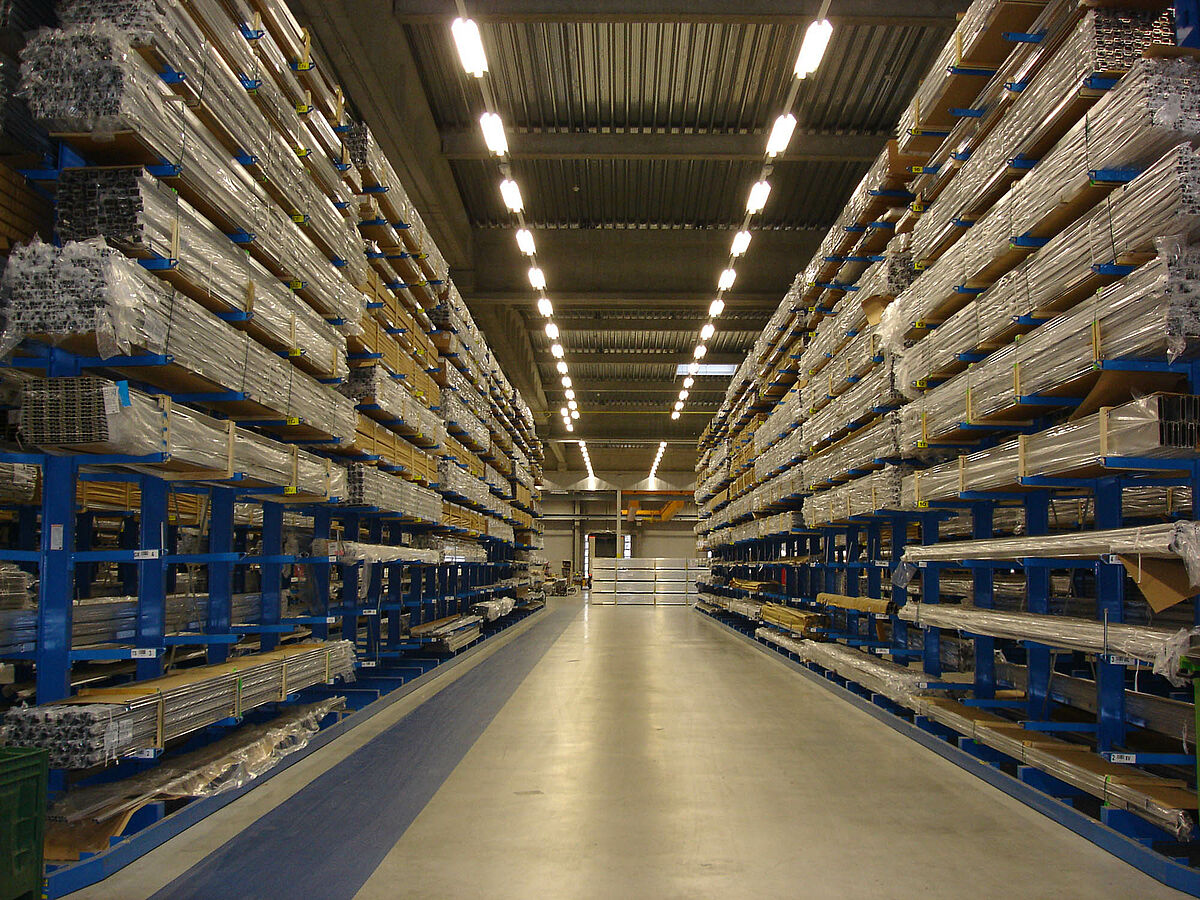
Imagine this: a rush order has to go out, but the products you need are barely findable amid warehouse chaos. This is exactly where efficient warehouse processes decide between success and frustration. From precise recording at goods receipt to lightning-fast order picking—every step matters to process orders quickly and without errors. Optimized processes save time and costs, keep customers happy, and reduce stress in day-to-day warehouse operations.
What are warehouse processes? – A brief definition
Warehouse processes include all steps that take place within a warehouse—from goods receipt to shipping. The goal is to have goods available at all times, process orders quickly, and use storage space efficiently. This includes not only planning but also the continuous optimization of workflows. A clear structure and coordinated processes ensure that everything meshes smoothly.
Goods receipt and quality inspection
Goods receipt is the first step in warehouse logistics and lays the foundation for efficient processes. Incoming goods are first unloaded, counted, and checked for damage or discrepancies. Accurate recording ensures that stock levels are updated correctly and prevents shortages or surpluses from arising in the first place.
Quality inspection takes place directly at goods receipt. Damaged or defective products are immediately flagged by the system before they enter the warehouse. This saves time and prevents later issues in the logistics process. Automated inspection systems with scanners, sensors, and intelligent software perform capture and checks efficiently. They detect defects such as incorrect weight or damage. These automations reduce errors to a minimum and ensure only flawless products enter the warehouse, increasing the efficiency of subsequent processes.
Putaway and storage location management
After inspection, goods are put away. Efficient storage location management ensures short travel distances and optimal use of available space. There are different strategies for storing goods efficiently. Two of the most common are chaotic (random) storage and fixed-location storage:
- Chaotic (random) storage: Goods are not assigned to a fixed location but stored wherever space is available. A well-functioning warehouse management system (WMS) is essential to maintain visibility at all times. The benefit: high space utilization and flexible location management.
- Fixed-location storage: Each item has a dedicated storage location. This makes orientation easier and is particularly suitable for companies with a manageable assortment. The downside: less flexibility and often not the most efficient use of space.
A mix that works: A combination of both strategies can be sensible. Fast-moving items are stored chaotically, while rarely needed products have fixed locations.
Order picking
Order picking is one of the most labor-intensive processes in the warehouse and significantly influences the efficiency of overall warehouse logistics. Here, goods are compiled based on customer orders, packed, and prepared for shipment. The more efficient this process runs, the faster goods can leave the warehouse.
Picking strategies for greater efficiency:
- Pick-by-voice: Pickers receive instructions via voice control, keeping their hands free and increasing speed. This method is particularly suitable for large warehouses with many different items.
- Pick-by-light: Light signals at storage locations indicate which items need to be picked. This method reduces search times and minimizes errors, which is especially beneficial with high throughput.
- Batch picking: Multiple orders are processed simultaneously. This saves travel and is especially useful when the same items are needed frequently.
Technology as a success factor
The use of barcode scanners and mobile devices makes picking more precise and faster. They prevent mispicks, update stock in real time, and minimize manual errors. Placing frequently used items near packing stations also saves time and shortens throughput times.
Shipping and goods issue
After picking comes shipping—the final step in the warehouse process. This is where it’s decided whether the goods arrive on time and in perfect condition. Well-thought-out packaging logistics ensure items are packed quickly and securely. Standardized packaging materials and sizes play a central role in saving time and protecting products optimally.
Efficient packaging processes: The right packaging determines whether goods are protected against damage. Cushioning materials and tailored carton sizes minimize potential issues during transport and save storage space.
Tracking for maximum transparency: Tracking systems are now standard and offer numerous benefits. They enable end-to-end shipment tracking, increase transparency for customers, and simplify handling of inquiries. Automated shipping labels and interfaces to carriers also save time and minimize sources of error.
KPIs as success indicators: Regular analysis of shipping processes helps identify weaknesses. Key metrics include throughput times, return rates, and the number of faulty shipments.
Challenges in warehouse logistics
Warehouse logistics is often a balancing act: on the one hand, inventory should be available at all times; on the other, costs must remain under control. Add to that challenges such as lack of space, time-consuming processes, and the need for precise inventory management. But don’t worry—with the right strategies, these hurdles can be overcome.
Inventory accuracy
Inaccurate inventory quickly leads to production stops and delayed deliveries. The causes often lie in incorrect data capture, inaccurate forecasts, or uncontrolled withdrawals. Automated inventory management systems that document movements in real time provide relief. The use of RFID and barcode systems also increases precision. Regular stocktakes reveal discrepancies early and improve planning reliability.
Space constraints
Growing product variety and larger order volumes often cause space problems in the warehouse. Expansion is often expensive and complex. A better solution is vertical storage using tall racking systems and mezzanine floors. Mobile shelving also optimizes utilization by eliminating space for unused aisles. Regular utilization analysis additionally reveals optimization potential.
Time management
Long travel routes and inefficient processes cost not only time but also money. Thoughtful layout and route planning significantly reduce these losses. Frequently needed items should be stored close together. Prioritizing orders also helps avoid bottlenecks.
Technologies to optimize warehouse processes
To design processes efficiently and avoid bottlenecks, companies are increasingly relying on modern technologies. Automated systems, real-time data, and smart software solutions help manage inventory precisely and accelerate workflows.
Automated storage systems
Automated storage systems enable goods to be stored and retrieved quickly and precisely without manual intervention. These systems use stacker cranes that run on rails and are integrated with conveyor technology. They unleash their full potential in high-bay warehouses, operating reliably even at great heights. The advantages: lower error rates and significant time savings. In addition, compact designs allow optimal use of storage space. Thanks to compact construction, space utilization is maximized while error rates drop significantly.
ERP systems and warehouse management
ERP systems consolidate all warehouse processes in a central software solution. They support inventory management, procurement, and lead-time control. With real-time data, bottlenecks can be identified early and resources used efficiently. Warehouse management modules also significantly facilitate picking, leading to higher productivity.
IoT and sensor technology
The Internet of Things (IoT) opens up new possibilities for warehouse logistics. Sensors on racks and pallets capture movements and transmit data directly to the WMS. This allows real-time inventory monitoring, detection of temperature fluctuations, and alerts for unauthorized access. IoT solutions also deliver valuable data to optimize warehouse processes by identifying particularly high-traffic areas.
Best practices for efficient warehouse processes
Efficient warehouse processes are no accident—they’re the result of clear strategies and continuous improvement. With the right measures, companies can not only speed up their warehouse logistics but also minimize errors and costs. Here are some proven best practices to help you:
Employee training:
- Regular training ensures employees are familiar with the latest technologies and processes.
- Focus on safety standards, efficient picking techniques, and the use of warehouse management systems.
- Qualified employees reduce error rates and contribute to smooth operations.
Regular process reviews:
- Capture and analyze relevant KPIs such as throughput times, picking errors, and inventory accuracy.
- Identify bottlenecks and inefficiencies through continuous monitoring.
- Derive concrete actions to optimize transport routes and storage space.
Lean management:
- Targeted measures to avoid waste—whether through unnecessary travel, excess inventory, or waiting times.
- Apply lean principles such as 5S (Sort, Set in order, Shine, Standardize, Sustain) for a structured warehouse environment.
- Focus on streamlined processes to increase productivity and reduce costs.
Conclusion
Efficient warehouse processes are far more than an organizational measure—they are a decisive competitive advantage. Well-designed warehouse logistics not only reduce costs but also shorten lead times and increase inventory accuracy. From optimal use of storage space and modern technologies to regular process controlling: every detail counts.
Companies that rely on automated storage systems, qualified employees, and continuous process optimization create the basis for smooth operations and fast delivery capability. In doing so, they secure not only customer satisfaction but also their competitiveness.
Want to optimize your warehouse logistics?
Our experts will be happy to advise you on tailor-made storage systems that fit your exact requirements. Request a no-obligation consultation now!
