In companies with larger warehouse areas, numerous racking systems are often in place that must withstand high loads every day. Every impact from forklifts, any overloading, or even the slightest material weakness carries the risk of damage. To prevent accidents and keep operations running smoothly, regular rack inspections are important and mandatory. They ensure that weak points are identified and remedied at an early stage before costly downtime occurs or employees are put at risk. In addition to complying with legal requirements, they help preserve the long-term value of racking systems and support efficient warehouse logistics.
Legal requirements for rack inspections
Rack inspections are a matter of operational safety and are required by law. Regular checks ensure that all storage equipment complies with current safety standards and that employees are protected from accidents. Various regulations define how these inspections are carried out and how often they must take place.
DIN EN 15635 and DGUV Rule 108-007: legal foundations
DIN EN 15635 forms the basis for the proper testing and inspection of racking systems. It describes the requirements for the safe use and maintenance of racks as well as the obligation to conduct regular inspections. This standard is complemented by DGUV Rule 108-007, which specifically addresses the safe operation of storage equipment. Both sets of rules stipulate that rack inspections must be carried out regularly by a competent person. In addition, visual checks at shorter intervals are required, with the frequency based on a risk assessment.
Ordinance on Industrial Safety and Health (BetrSichV): employer obligations
The Betriebssicherheitsverordnung (BetrSichV – Ordinance on Industrial Safety and Health) obliges companies to operate work equipment safely and to have it inspected regularly. This also includes racking systems. Employers must ensure that rack installations comply with the regulations and that potential hazards are identified in good time. This includes appointing qualified inspectors as well as documenting all inspections carried out. If defects are identified, measures to eliminate them must be initiated immediately to avoid endangering employees.
DGUV Information 208-043: guidance on safe storage
DGUV Information 208-043 sets out specific requirements for the safe use and maintenance of racking systems. This professional association guideline provides practical instructions for minimizing risks in the warehouse and describes measures to prevent accidents. These include specifications for correct load distribution, rack stability, and regular inspections by trained specialists. These rules are essential—especially in warehouses where industrial trucks such as forklifts are used—to ensure safety in day-to-day operations.
Section 5 of the Occupational Health and Safety Act (ArbSchG): risk assessment
The Occupational Health and Safety Act obliges employers to regularly assess potential hazards in the workplace and to take appropriate risk-reduction measures. Section 5 ArbSchG requires a systematic identification of possible risks, which also includes the safety of racking systems. Based on this risk assessment, inspection intervals are defined and protective measures specified. When risks are identified, preventive measures must be implemented immediately to safeguard employees’ health and safety.
How often must rack inspections be carried out?
According to DIN EN 15635, a competent rack inspection must be performed at least once a year. In addition to this main inspection, further visual checks by trained employees or safety officers are required. The frequency of these checks is determined by the respective risk assessment. In particularly sensitive areas or for heavily used racking systems, weekly or monthly inspections may be necessary. The goal is to detect damage at an early stage and to ensure the long-term safety of warehouse operations.
Why are rack inspections important?
Companies should not carry out inspections merely to meet legal requirements. Inspections offer numerous benefits and are a central building block for warehouse safety, preserving the value of racking systems, and maintaining stable, efficient logistics.
- Protect employees:
Damaged or overloaded racks are a common cause of serious workplace accidents. Regular checks identify and eliminate potential hazards in good time before injuries occur.
- Avoid material damage and production downtime:
If a racking system fails due to damage, production processes can be interrupted. This leads to delivery delays and additional costs. Rack inspections ensure that such failures are avoided through preventive measures.
- Comply with the law:
Companies are legally obliged to have their racks inspected regularly. Failure to comply can result in significant penalties or fines. A documented and properly conducted rack inspection protects against legal consequences.
- Increase rack service life:
Early detection of minor damage prevents it from developing into larger, more costly problems. Regular inspections extend the service life of racking systems and save on long-term repair or replacement costs.
What is checked during a rack inspection?
During a rack inspection, inspectors test the structural integrity, stability, materials, and correct assembly. They examine the racking system for structural damage, overloading, and impact damage. Impacts from forklifts or improper use can impair load-bearing capacity and pose a potential hazard to warehouse operations.
Stability is another key aspect. Even small deviations from vertical can compromise the stability of the entire system. Inspectors check whether the rack installation is securely anchored and properly aligned. They pay particular attention to whether loads are evenly distributed to ensure the rack does not tip or give way.
The materials themselves are also subject to strict checks. Particular attention is paid to damage such as cracks in weld seams, signs of corrosion, or missing components. This examination is especially crucial for older or heavily used racking systems to initiate maintenance measures at an early stage.
Another focus of the rack inspection is checking the assembly. Inspectors verify whether the racking system has been assembled correctly in accordance with the manufacturer’s specifications. Incorrect or incomplete assembly can lead to uneven loading, which jeopardizes the safety of the entire system. Only when all components are properly installed is long-term stability ensured.
The process of a professional rack inspection
A professional rack inspection follows a structured and standardized process aimed at reliably identifying potential safety deficiencies and initiating suitable measures to eliminate hazards.
It begins with an on-site analysis and visual inspection, during which specialists examine the racks closely. They check the entire structure of the racking installation to identify visible damage such as design defects, cracks, overloading, or impact damage. Even minor deviations that could impair long-term stability are carefully documented. The visual inspection also focuses on potential sources of danger, such as loose components or improperly positioned loads.
This is followed by the documentation of findings. It provides assurance for rack inspectors and companies alike that any defects have been recorded and can then be remedied. All identified defects are documented in an inspection report that includes details on the type and extent of the damage. Photo documentation supports these written entries and provides clear visual evidence of the defects found. After documentation, inspection labels are attached to the inspected racking installations to confirm that the inspection has been carried out and that the installation can be used safely in its intended condition.
Finally, as part of the post-inspection measures, concrete steps are taken to rectify any damage. This includes color-coding defects according to urgency: Green indicates minor damage with no immediate need for action, orange points to issues that should be remedied promptly, while red requires immediate measures to avoid jeopardizing operational safety. Based on this assessment, those responsible arrange repairs or the replacement of damaged components as necessary.
If serious defects are identified and subsequently remedied, the stability of the rack must be rechecked and documented. This proof serves internal safety purposes and protects against legal consequences in the event of external audits or accident investigations.
Which racking systems must be inspected?
Regardless of their design or area of application, all racking systems in a facility are subject to inspection requirements. Especially in warehouses with different racking systems, it is important that each system is inspected specifically and properly. The following list shows the racking systems that typically must be inspected:
- Pallet racks
- Shelving (box/fixed shelving)
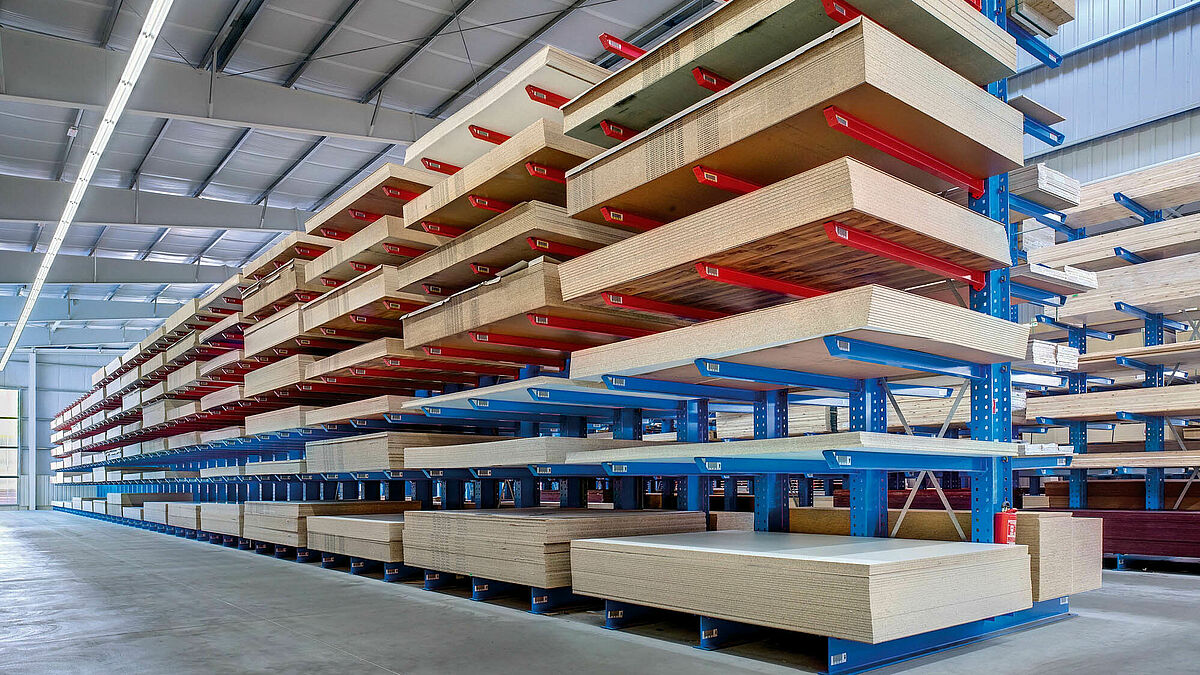
- Cantilever racks
- Mezzanines
- Special storage racks for hazardous materials
Because each type of rack is exposed to different loads and risks, regular inspections help ensure long-term safety and functionality.
Qualifications of rack inspectors
A professional rack inspection requires comprehensive expertise and specific qualifications. Only competent persons who meet certain requirements and have completed appropriate training may carry out these inspections. The aim is to ensure that potential hazards are identified early and assessed correctly.
Requirements and necessary training
DIN EN 15635 requires that rack inspections be carried out by knowledgeable, so-called competent persons. They must have knowledge of the design and load limits of racking systems and be able to identify and assess damage. Qualified training provides the necessary content, including the analysis of design defects, load distribution errors, and the proper assessment of stability. Many providers offer specialized courses that cover both theoretical knowledge and practical exercises.
Internal or external inspection: pros and cons of both options
Companies can either train internal specialists or commission external rack inspectors. Both options have specific advantages and disadvantages:
- Internal inspection:
- Pros: Short response times to acute issues and a deeper understanding of the company’s own warehouse structure.
- Cons: Training and continuing education incur additional costs, and responsibility lies entirely with the company.
- External inspection:
- Pros: Independent assessment, up-to-date knowledge of standards and regulations, and less organizational effort for the company.
- Cons: Recurring costs arise, and short-notice inspections may not always be immediately available.
The decision between internal and external inspections depends on warehouse size, safety requirements, and internal resources.
Rack inspection directly from the manufacturer
A rack inspection performed by the manufacturer offers numerous advantages that contribute to the optimal maintenance and safety of your racking systems. As the designers of the racks, manufacturers are familiar with general safety requirements and are aware of specific weak points or potential problem areas of their own constructions. This enables particularly targeted inspections and preventive recommendations that extend rack service life and prevent accidents.
Another advantage lies in in-depth expertise regarding material properties and load limits. Manufacturers have internal data and experience that help them detect defects early and avoid costly damage. Suitable spare parts are usually available directly, enabling rapid rectification of problems without long waiting times.
In addition, manufacturers can provide recommendations for optimizing warehouse logistics in connection with the rack inspection. They know how their systems can be used efficiently and how load distribution can be optimized to minimize future damage.
However, if you are dissatisfied with an existing racking system or plan to switch to a new one, an independent, non-manufacturer inspection can be useful. External specialists offer an objective assessment and reveal possible weaknesses. This gives you a second opinion and enables informed decisions for future investments.
Costs of a rack inspection and potential savings
The exact costs of a rack inspection vary and depend on several factors.
- Type and size of the racking system: Pallet racks and cantilever racks differ in inspection effort. The number of rack units also affects the total price.
- Age and condition of the racks: Older or heavily used systems may require additional checks or more extensive documentation.
- Warehouse location: If the warehouse is in a remote region, travel costs can increase the total price.
- Inspector qualifications: Costs depend on whether internal or external specialists are used and which certifications the inspectors hold.
Conclusion
Companies benefit in the long term from preventive maintenance that reduces expensive repairs and consequential damage. Whether via internal specialists or external inspectors—the right choice of inspection method and the use of suitable technologies are crucial for safe warehouse operations. Manufacturer inspections offer targeted control, while independent inspectors serve as an objective authority when changing systems or pursuing optimization.
