
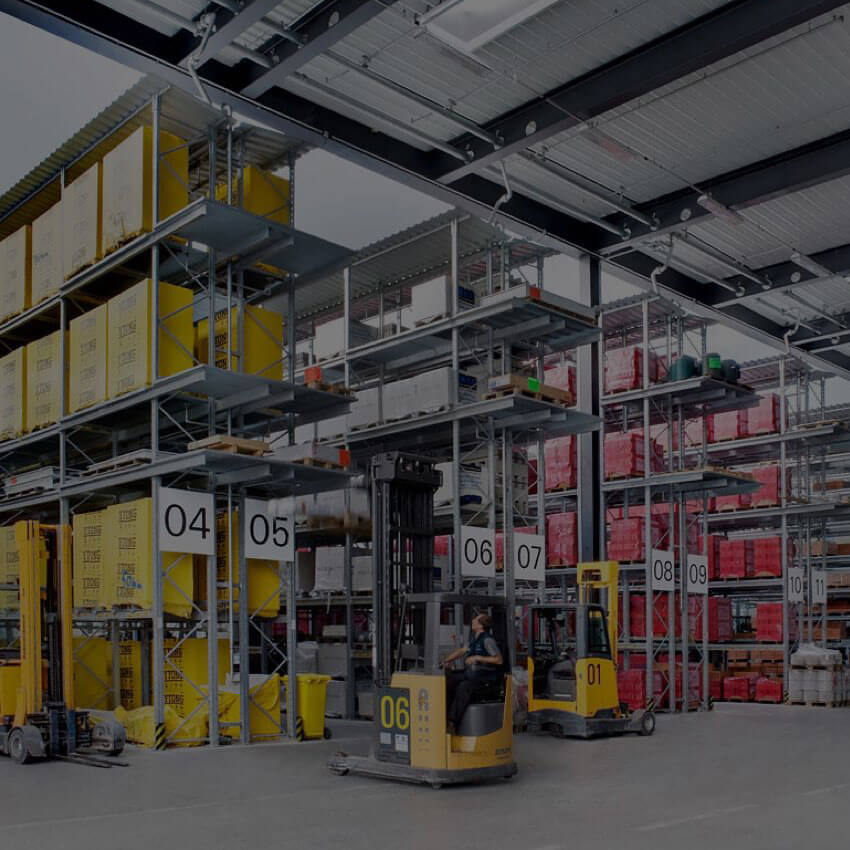
A warehouse is the heart of logistics – but wherever goods are stored, risks also arise. Statistics show that thousands of workplace accidents occur in warehouses across Europe each year. Many of these can be prevented with reliable risk management. It’s not only employee safety that’s at stake: inventories and operations are also severely affected by fires, floods, or organizational errors. In addition, unforeseen incidents disrupt workflows and may cause substantial financial losses.
1. Risks for warehouse personnel
Falls and injuries
Slips, trips, and collisions are among the most common causes of accidents in warehouses. Slippery floors often result from spilled liquids, oil residues, or dust deposits that reduce traction. Improperly stored items such as pallets, boxes, or tools block walkways and easily become tripping hazards. Unsecured transitions, e.g., between different warehouse levels, further increase the risk. Inadequate lighting exacerbates the danger, as employees may not notice obstacles or hazards in time.
Accidents caused by collisions occur primarily in high-traffic areas. Vehicles such as forklifts or pallet trucks are frequently involved. A lack of traffic rules or insufficient separation of pedestrian walkways and driving lanes significantly increases the risk.
Measures:
- Cleaning and maintenance:
Regular, thorough cleaning of warehouse areas is essential. Spilled liquids and other contaminants should be removed immediately. Special non-slip floor coatings can provide additional safety.
- Safety markings:
Clear markings for footpaths, traffic lanes, and hazardous areas improve orientation. Colored lines, warning signs, and barriers separate critical zones and reduce the risk of collisions.
- Optimize lighting:
Modern LED lighting systems with motion sensors ensure that all areas of the warehouse are adequately illuminated. Especially in corners or transition areas, companies should install additional light sources to minimize hazards.
- Introduce a traffic concept:
An effective traffic concept regulates the flow of vehicles and pedestrians within the warehouse. Clear right-of-way rules, stop signs, and marked intersections reduce the likelihood of collisions. Regular safety briefings train employees in proper behavior.
- Personal protective equipment (PPE):
Slip-resistant safety shoes are an important component of PPE. They reduce the risk of falls, particularly on smooth or wet floors.
Improper operation of work equipment
Work equipment such as forklifts, pallet trucks, or racking systems is indispensable in warehouse operations. However, improper handling, insufficient training, or technical defects can quickly lead to dangerous situations. The risk of operating errors rises under heavy workloads or time pressure and can result in accidents. Unsecured loads, excessive speed, or improper maneuvers often lead to collisions or property damage.
Another issue is the use of unsuitable equipment not tailored to the warehouse’s specific requirements. This can lead employees to improvise and thereby disregard safety requirements.
Measures:
- Regular training:
Employees should receive regular training on the use of all equipment. In addition to basic operating knowledge, this includes generally applicable safety regulations. Practical exercises strengthen understanding and the avoidance of risks.
- Maintenance and inspection:
Technical equipment must be serviced at defined intervals to detect defects early and prevent accidents. Documented inspections ensure that all machines are functional and safe.
- Operating instructions:
Each piece of equipment should have clear and easily accessible operating instructions. These explain correct operation and point out potential hazards. But even the best instructions are useless if employees lack access or don’t know they exist. Visual guides or warning notices can also be attached directly to the machines.
- Speed and traffic rules:
Vehicles such as forklifts must adhere to speed limits and right-of-way rules. Marked driving routes and prohibitions for certain zones prevent vehicles from entering pedestrian areas uncontrolled.
- Safety precautions:
Machines with integrated protective mechanisms, such as emergency stop switches, sensors, or overload warnings, minimize the risk of misuse. PPE, e.g., helmets and safety glasses, provides additional protection against accidents.
Health risks from physical strain
Physical strain is an everyday risk in warehouse operations. Repeated lifting of heavy loads, prolonged standing, or monotonous movements place considerable stress on the body. The back, joints, and muscles are particularly affected. Without targeted countermeasures, such strain can lead to chronic conditions such as back pain, herniated discs, or joint inflammation. These issues are often due to poor posture, inadequate movement techniques, or the absence of supportive aids.
In hectic work situations, employees often neglect ergonomic movement patterns. The risk of injury or overexertion thus increases. A lack of breaks or poorly designed workplaces also contributes to physical overload.
Measures:
1. Ergonomic workplace design:
Workstations should be designed to minimize physical strain. Height-adjustable tables, ergonomically arranged tools, and non-slip floor mats help increase working comfort and reduce strain.
2. Lifting aids and technical support:
Modern aids such as lift tables, electric hoists, or exoskeletons relieve the body when lifting heavy loads. These devices reduce the necessary muscle force and prevent improper strain.
3. Training in ergonomic working:
Employees should be trained regularly to avoid incorrect movement patterns. This includes correct lifting and carrying of loads as well as adopting a back-friendly posture. Practice-oriented exercises promote the application of ergonomic principles in daily work.
4. Promote breaks and movement:
Regular breaks and short movement units during work promote circulation and reduce tension. Providing rest areas or ergonomic seating in break rooms can also help relieve the body.
5. Health programs and prevention:
Companies can support employees in the long term with targeted health programs, e.g., back training or physiotherapy. Preventive measures such as workplace analyses by ergonomics experts help identify and mitigate strain at an early stage.
2. Risks to inventory
From fires and water damage to theft – the risks to goods in storage are diverse. Without effective preventive measures, such incidents can cause immense damage. Structured risk management ensures that inventory is protected as effectively as possible.
Fire protection
Fires are among the most dangerous risks for people and inventory. They can be triggered, for example, by short circuits, overheated machines, or improperly stored hazardous substances. Materials such as cardboard, wooden pallets, and plastics promote rapid flame spread. Especially in warehouses with high goods density or hazardous materials, fires cause immense damage. In addition to the loss of goods, business interruptions often jeopardize overall operations.
In Germany, fire protection is subject to strict legal requirements. The Technical Rules for Hazardous Substances uniformly document how hazardous goods must be stored. In addition, the German Social Accident Insurance (DGUV) provides comprehensive guidelines for operational fire protection in Information 205-001, “Operational Fire Protection in Practice”.
Measures:
- Installation of fire detection and extinguishing systems:
Early warning systems such as smoke and heat detectors identify fires as they start. Sprinkler systems or fixed extinguishing systems prevent fire spread and further damage. These systems should be serviced regularly.
- Fire extinguishers and emergency plans:
Fire extinguishers must be available at easily accessible locations throughout the warehouse. Training employees to use extinguishers correctly increases responsiveness in an emergency. Emergency plans should define clear responsibilities and escape routes.
- Safe storage of hazardous substances:
Flammable or dangerous materials should be kept in specially designed safety containers or hazardous materials cabinets. These areas should be well marked and separated from other storage zones.
- Inspect electrical installations:
Regular inspections of wiring, outlets, and electrical devices prevent short circuits or overheating. Defective equipment should be repaired or replaced immediately.
- Fire safety training for employees:
Employees should receive regular instruction in fire safety. This includes recognizing hazards, appropriate behavior in the event of a fire, and the use of emergency equipment.
Water damage and flooding
Flooding can result from extreme weather conditions such as heavy rainfall or high water, but also from defective pipes, leaking roofs, or damaged sprinkler systems. Particularly sensitive goods such as electronics, paper products, or perishable items are at risk. Water damage destroys inventory and may compromise the building structure.
Measures:
- Create watertight storage areas:
Floor thresholds or seals prevent water from entering sensitive storage areas. Highly exposed zones should be equipped with water-resistant materials to minimize damage.
- Moisture control and early warning systems:
Hygrometers and moisture meters help detect critical values early. Water sensors or alarm systems detect leaks or flooding and alert responsible personnel in time.
- Inspection of piping and sprinkler systems:
Regular maintenance and inspection of pipelines, sprinkler systems, and roof seals prevent leaks and flooding. Defects should be repaired immediately before greater damage occurs.
- Clearance from the floor:
Racks and storage areas should be designed so that goods are not stored directly on the floor. Pallets or racking systems with sufficient clearance protect inventory from rising water.
- Flood emergency management:
A well-thought-out emergency plan for flood events should include clear instructions on how to secure goods quickly and evacuate employees. Mobile barriers or sandbags can be used as temporary defenses.
Theft and vandalism
Theft and vandalism are aggravating and set off a long chain of consequences. Inadequately secured doors or insufficient surveillance offer potential perpetrators an opportunity. In addition to direct financial losses from stolen goods, indirect costs often arise from damaged items or sabotage to the building. High-value goods such as electronics, jewelry, or easily transportable items are particularly at risk.
Measures:
- Improve access control:
Electronic access systems with personalized access cards or codes ensure that only authorized persons can enter the warehouse. Entries and exits should be documented to trace unauthorized access.
- Install camera systems:
High-resolution surveillance cameras with motion detection monitor critical areas and entrances around the clock. The recordings deter offenders and provide evidence in the event of damage.
- Use security lighting:
Motion detectors and bright lighting in warehouse and outdoor areas minimize opportunities for thieves and vandals. Dark, hard-to-see areas should be illuminated specifically.
- Train personnel:
Employees should be trained to recognize unusual behavior or suspicious activity and report it immediately. Awareness of security measures reduces the risk of human error.
- Secure valuable goods separately:
High-value items should be stored in lockable areas or specially secured containers. Alarm systems and additional safeguards increase protection.
- Engage external security services:
In larger warehouses or particularly exposed locations, regular patrols by external security services can be useful. They increase presence and deter potential offenders.
3. Organizational and technical risks
Organizational and technical weaknesses significantly impair smooth operations in the warehouse. Errors in inventory management, technical failures, or inadequately trained employees often lead to avoidable delays and additional costs.
Faulty inventory management
Inadequate or faulty inventory management is one of the most common causes of organizational problems in warehouses. Improperly labeled goods or incorrect storage principles can lead to items being lost or expiring.
This also includes insufficient control of basic processes such as FIFO (First In, First Out) and LIFO (Last In, First Out).
Measures:
- Introduce warehouse management software:
A modern warehouse management system (WMS) monitors inventory in real time, supports adherence to storage principles, and automates key processes such as labeling and tracking.
- Standards for labeling and storage:
Uniform labeling methods using barcodes or RFID chips ensure rapid identification of goods. Clear rules for storage prevent errors.
- Regular stock checks:
Inventories and cycle counts at set intervals help identify and correct discrepancies early.
- Employee training:
Employees must be familiar with the basics of inventory management and the technologies used. Regular training ensures a consistent understanding.
System failures due to technical problems
Technical problems such as software errors, hardware defects, or power outages pose significant risks to warehouse operations. A sudden system failure brings operations to a standstill and interrupts supply chains. Companies are particularly dependent on reliable technology in automated warehouses.
Measures:
- Implement backup systems:
Regular data backups and redundant systems ensure that a technical problem does not lead to a complete shutdown.
- Provide emergency power:
An uninterruptible power supply (UPS) or generators keep operations running during a power failure, especially in automated or temperature-controlled warehouses.
- Regular maintenance:
Technical equipment and systems should be checked and serviced at fixed intervals to detect defects early.
- Ensure IT support:
An IT support team that can respond quickly to issues minimizes downtime and ensures smooth operations.
Insufficient employee training
Different employees work together in a warehouse like the gears of a clock. If one cog is defective, it affects other areas. That’s why regular training is particularly important. Improper handling of technology, lack of knowledge of safety regulations, or misunderstandings in processes lead to delays and increase safety risks for everyone involved.
Measures:
- Introduce training programs:
Continuous training on technology, safety standards, and efficient working methods ensures well-trained employees.
- Optimize onboarding processes:
New employees should receive a solid introduction to warehouse procedures to avoid mistakes from the outset.
- Standardized process documentation:
Clearly defined, easy-to-understand process descriptions help prevent misunderstandings and standardize workflows.
- Feedback and improvement cycles:
Employees should be able to provide feedback on processes and training. This fosters a culture of continuous improvement.
How companies can reduce risks in the warehouse
Successful risk management in the warehouse is based on a combination of preventive measures, technical optimization, and financial protection. Companies minimize hazards with a well-thought-out safety concept and the right equipment. At the same time, insurance provides important protection against the financial consequences of unforeseen incidents.
Safety concepts for employees
Prevention begins with clear behavioral guidelines and training. Regular instruction in occupational safety and the use of personal protective equipment (PPE) significantly reduces the risk of injury. In addition, measures such as separating pedestrian paths and traffic lanes or using safety markings ensure a safe working environment.
Optimizing technical systems
Warehouse management software (WMS) and automated guided vehicles (AGVs) reduce human error and ensure smooth operations. Regular maintenance of machines and equipment prevents failures. Backup systems and emergency generators ensure that operations continue even during technical disruptions.
Insurance against financial losses
Despite all precautions, residual risks remain. Companies should therefore have appropriate insurance. Liability, fire, and theft insurance protect against major financial losses and secure economic stability in the event of damage.
Is your warehouse safe enough?
Safety in the warehouse begins with the regular inspection of racking systems. According to European standard EN 15635:2008, operators are obliged to have storage equipment such as cantilever, pallet, or vertical racks inspected annually by a qualified person. In addition, operators are required to conduct independent visual inspections at regular intervals.
Why is rack inspection so important?
Storage equipment is considered work equipment and must always be in perfect condition to ensure employee safety. Early detection of damage protects against serious accidents, high repair costs, and the loss of safety-critical properties.
OHRA offers a professional rack inspection in accordance with EN 15635, tailored to your storage systems. Our qualified rack inspectors thoroughly examine your systems and document all results in an inspection report.
Our safety check includes:
- Rack inspection according to EN 15635 and OHRA factory standards
- Visual inspection by certified rack inspectors
- Final inspection report and inspection label
Create safety now! Protect your employees, goods, and operations with our professional rack inspection. Request our rack inspection and receive an individual offer.
