
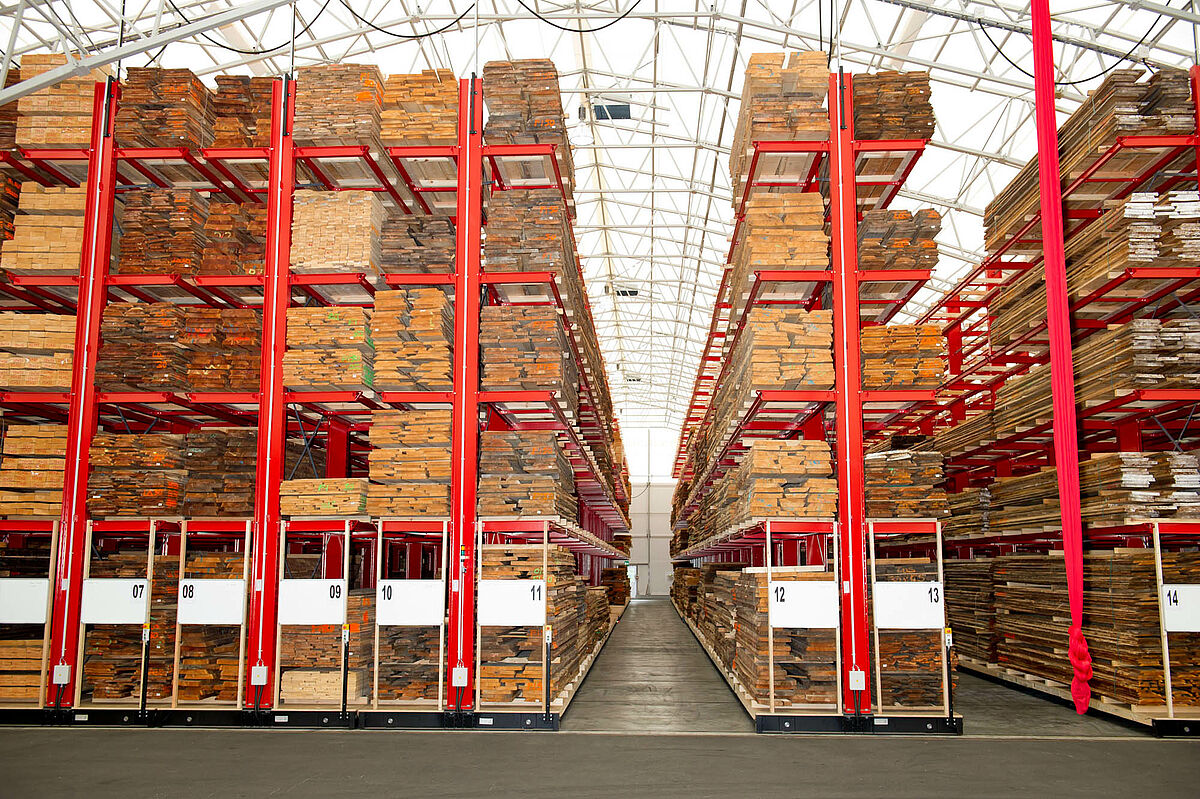
Without functioning warehouse logistics, companies with their own warehouse can’t operate. From goods receipt to shipping, items must be stored, managed, and moved efficiently. But what exactly is warehouse logistics?
Warehouse logistics encompasses all processes that control the flow of materials in a warehouse. This includes the receipt, storage, picking, and shipping of goods. The goal is to optimize workflows, reduce costs, and keep products available at all times.
Definition: What is warehouse logistics?
Warehouse logistics manages all movements of goods within a warehouse. Companies coordinate where, how long, and under which conditions products are stored. They plan transport routes, organize inventory management, and ensure that goods leave the warehouse on time.
Efficient processes are crucial. The better workflows are structured, the faster orders can be processed and bottlenecks avoided. Digital systems play a central role: they record inventory levels in real time, optimize picking routes, and minimize errors during putaway and retrieval.
Tasks of warehouse logistics
Warehouse logistics doesn’t stop at storing goods. It comprises a multitude of processes that ensure a smooth supply chain. Every company has specific requirements—but the core tasks remain the same:
- Goods receipt: Companies check incoming deliveries for completeness and quality. They then assign the goods to the correct storage locations.
- Inventory management: To avoid overstock and shortages, companies keep a constant eye on their inventory. Digital systems help track goods movements and make optimal use of storage capacity.
- Picking: Ordered goods are compiled and prepared for dispatch. Efficient strategies such as “pick-by-voice” or “pick-by-light” shorten processing times.
- Goods issue and shipping: Completed orders leave the warehouse on time and in the correct quantity. Packaging, labeling, and transport play a decisive role here.
Types of warehouses in warehouse logistics
Not all warehouses are the same. Depending on the industry, product requirements, and logistics workflows, companies use different types of warehouses. While some rely on high turnover speed, others need long-term storage solutions for seasonal goods or raw materials.
Choosing the right warehouse impacts efficiency, costs, and delivery speed. Distribution warehouses shorten transport routes, while automated warehouses optimize processes. Specialized solutions such as cold storage or hazardous goods warehouses ensure safety and quality assurance.
You can find a detailed overview of the different warehouse types and their areas of application in our blog post: What types of warehouses are there?.
Efficient warehouse logistics – methods and strategies
Well-designed warehouse logistics increases efficiency, saves costs, and reduces errors. Companies use various strategies to optimize material flow and manage inventory in the best possible way.
First In, First Out (FIFO) – optimal inventory rotation
With the FIFO principle, the goods stored first are also the first to leave the warehouse. In industries with material-related aging processes, this method is essential to avoid quality losses. Especially in timber trade and plastics as well as metal processing, FIFO ensures that materials aren’t stored for too long and retain their properties.
FIFO is also important in DIY and specialty stores, for example for paints, varnishes, or adhesives that dry out or change consistency over time. Companies use flow rack systems or well-structured pallet and vertical racks to specifically pick older goods first.
Particularly relevant for these industries:
Suitable racking systems:
Last In, First Out (LIFO) – efficient use of storage space
With the LIFO principle, the most recently stored goods are picked first. This method is particularly suitable for stackable materials where a fixed sequence is irrelevant. Building materials, metal products, or plastic parts can be stored efficiently because older stocks don’t necessarily have to be used first.
Many companies use LIFO to make optimal use of storage space. Since goods can be picked easily from the front, the logistical effort for putaway and retrieval is reduced. Especially in metal processing, building materials retail, or for large plastic components, LIFO is preferred because these products are stackable, robust, and durable.
Particularly relevant for these industries:
Suitable racking systems:
ABC analysis – targeted prioritization of inventory
Not all goods have the same importance in the warehouse. The ABC analysis helps companies strategically prioritize their inventory to reduce costs and make processes more efficient. Items are grouped into three categories:
A items are particularly valuable or high-revenue but are usually stored in small quantities. They should therefore be easily accessible to process orders quickly without delays.
B items have a medium inventory turnover and are regularly requested. Ideally, they are stored in areas that are easy to reach but not directly in prime locations.
C items take up a lot of space but have a lower share of revenue. They are needed less frequently and can therefore be stored in less central areas to free up valuable space for A and B items.
Using the ABC analysis, companies optimize their warehouse strategy and reduce unnecessary stock. Especially in industries with a high flow of goods, such as metal processing or building materials, this method ensures shorter picking times and lower storage costs.
Particularly relevant for these industries:
Suitable racking systems:
Cross-docking – rapid distribution without interim storage
Cross-docking reduces storage time to a minimum by directing goods straight from inbound to outbound. Instead of storing products, companies sort incoming goods immediately and forward them to the designated destinations. This helps lower storage costs, shorten throughput times, and design transport routes more efficiently.
Cross-docking is a proven strategy, especially in industries with high throughput. Large retail companies use it to supply branches with new products faster without stacking goods in interim storage. The automotive industry also uses the principle to deliver components to production lines just in time.
For cross-docking to run smoothly, you need precise logistics planning and digital systems that coordinate orders in real time. Automated scans, barcode systems, and intelligent warehouse management software ensure that every delivery goes directly to the correct outbound area.
Particularly relevant for these industries:
- Building materials
- Specialty stores
- Mechanical engineering & metal processing
- Vehicle recyclers & towing services
Suitable racking systems:
Automation – digitally controlling warehouse processes
Digitalization is fundamentally changing warehouse logistics. Modern warehouse management systems (WMS) record stocks in real time and control putaway and retrieval precisely. AI-driven software forecasts future demand and prevents overstock or shortages. Picking robots and automated guided vehicles (AGVs) ensure efficient goods movement—around the clock and without human intervention.
Automated processes speed up workflows, lower error rates, and reduce personnel costs. At the same time, they enable flexible scaling: as the company grows, warehouse logistics can be adapted with little effort. Automation is a decisive competitive advantage, especially in industries with high throughput rates and precise requirements.
Particularly relevant for these industries:
Suitable racking systems:
Challenges and solutions in warehouse logistics
Efficient warehouse logistics requires more than good organization—it must respond flexibly to challenges. Rising customer expectations, high storage costs, and complex supply chains present major tasks. But with the right strategies, these challenges can be mastered.
Lack of space and rising storage costs
Storage space is expensive and often limited. Those who don’t make optimal use of the available space pay unnecessarily high costs. Smart storage strategies help here: high-bay warehouses maximize vertical space, while dynamic storage systems shorten routes and use space efficiently. Automated storage solutions further increase efficiency by avoiding empty spaces and optimizing warehouse movements.
Fluctuating demand and inventory management
Many companies struggle with unpredictable demand fluctuations. Excess stock ties up capital, while shortages lead to delivery delays. Modern warehouse management systems analyze real-time data and enable precise demand forecasting. Just-in-time deliveries reduce the required storage capacity without compromising delivery capability.
Error rates in picking and shipping
Every mistake costs time and money. Incorrectly picked or incomplete orders lead to returns and dissatisfied customers. Automated picking systems such as “pick-by-light” or “pick-by-voice” minimize errors and speed up processes. Barcode scanners and RFID technology also help reduce discrepancies and increase accuracy in the warehouse.
Integration of digital technologies
Many companies still work with outdated systems or manual processes. This makes it difficult to control warehouse logistics and leaves workflows prone to errors. The solution lies in digitalization: warehouse management systems (WMS) network all processes, enable real-time monitoring, and ensure efficient control of inbound and outbound goods.
Sustainability in warehouse logistics
Environmentally friendly warehouse strategies are becoming increasingly important. Companies are relying more on energy-efficient warehouse buildings, optimized transport routes, and recyclable packaging materials. Automation also reduces energy consumption by controlling processes more precisely and avoiding unnecessary goods movements.
The future of warehouse logistics – trends and developments
Warehouse logistics is continually evolving. New technologies and increasing demands for efficiency, sustainability, and flexibility are transforming the industry. Automation, digital systems, and sustainable concepts play an ever-greater role.
Modern warehouses increasingly rely on AI-supported systems that record inventory in real time, reorder automatically, and detect shortages at an early stage. Robotics solutions are increasingly taking over transport and picking. Automated guided vehicles (AGVs) and autonomous drones facilitate internal material flow and accelerate processes.
At the same time, sustainable warehouse strategies are gaining importance. Companies are focusing on energy-efficient buildings, optimized transport routes, and resource-saving packaging. Green warehousing reduces CO₂ emissions by using renewable energy or introducing reusable packaging systems.
Flexibility remains a central topic. Companies must be able to adapt their storage capacities quickly to respond to market changes. On-demand warehousing allows short-term rental of storage space to balance seasonal fluctuations. Modular racking systems and adaptable storage strategies also help meet rising demands.
Despite automation, people remain a key factor in warehouse logistics. Collaborative robots (cobots) relieve employees of physically demanding or monotonous tasks, while augmented reality (AR) simplifies picking. Digital systems not only improve efficiency but also enhance safety and ergonomics in the warehouse.
The future of warehouse logistics lies in the combination of automation, digitalization, and sustainability. Companies that invest early in modern technologies secure a long-term competitive advantage and increase the efficiency of their warehouse processes.
Conclusion – Efficient warehouse logistics for your business success
Well-organized warehouse logistics form the backbone of efficient supply chains. Companies that optimize their warehouse processes benefit from lower costs, faster workflows, and higher customer satisfaction. Digital systems, automated processes, and strategic warehouse organization are decisive factors for staying competitive.
Modern technologies such as warehouse management systems, robotics, and AI-supported analytics help monitor inventory in real time and avoid shortages. At the same time, smart warehouse strategies enable precise control of material flow. Companies that adopt sustainable concepts reduce costs and contribute to environmental protection.
Warehouse logistics will continue to play a central role in the future—with ever new challenges and opportunities. Those who address innovative solutions early can maximize the efficiency of their warehousing and operate successfully in the long term.
Find the optimal warehouse solution now
Every company has individual requirements for its warehouse—from choosing the right racking system to making optimal use of available space. Unsure which warehouse solution best suits your goods and processes? Contact us for a personal consultation! Together, we’ll find the right racking system that optimizes your workflows and increases your efficiency.
Get non-binding advice now!
