 6 photos



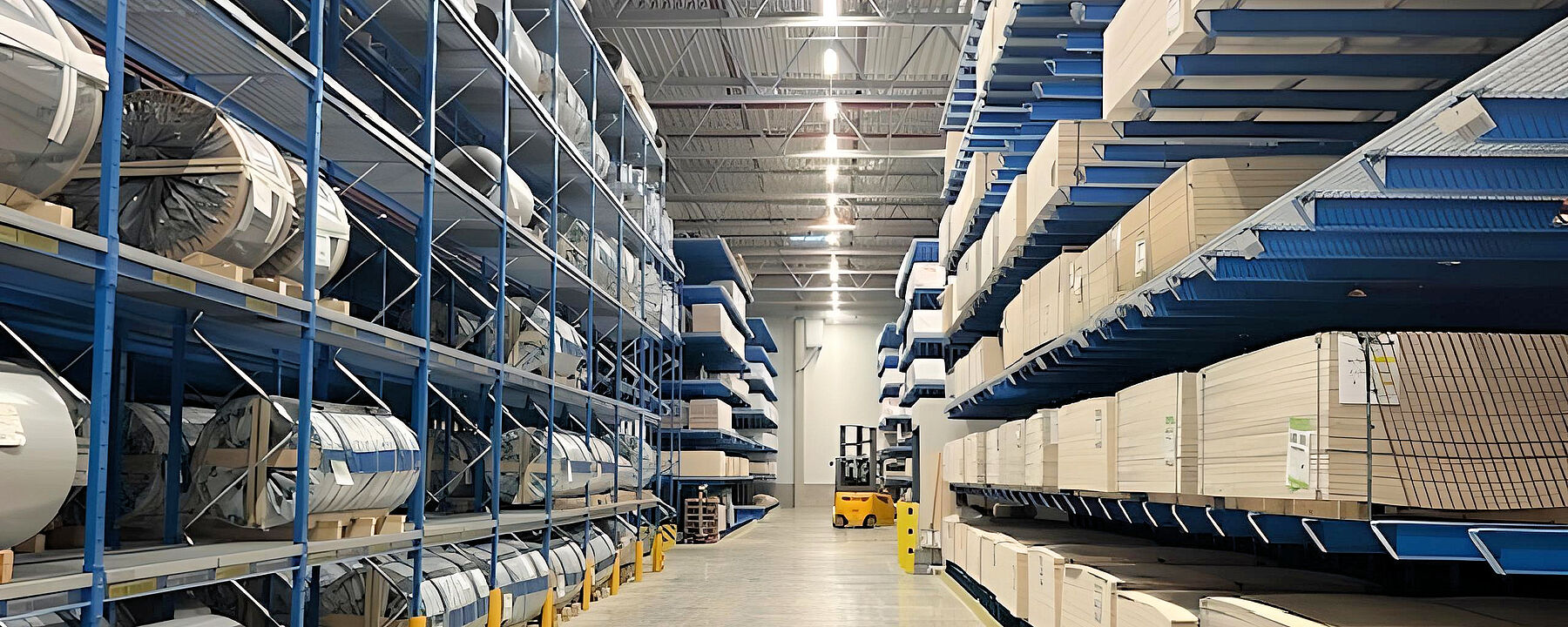
Knaus Tabbert, a leading manufacturer of leisure vehicles in Europe, has significantly expanded its production capacity at its headquarters in Jandelsbrunn with a new production hall. A directly connected warehouse enables production to be supplied with a minimal parts lead time. OHRA supplied the cantilever and pallet racks for the new warehouse - they offer high load-bearing capacities even at great heights, and the Kerpen-based system provider was also best able to fulfil the demanding requirements regarding the fire protection systems.
Project data
Short distances and FIFO
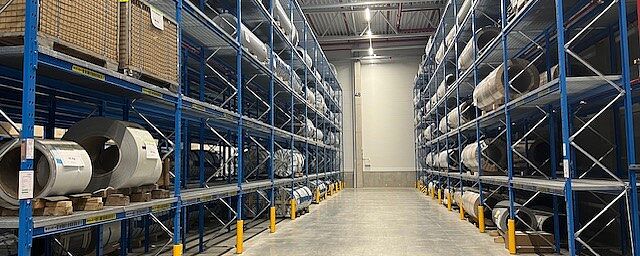
The new warehouse replaces various block, cantilever and conventional pallet racking warehouses, some of which were also rented from external service providers. The direct integration of the new warehouse into production minimises transport routes and reduces stocks of materials and parts within production. At the same time, storage in the new cantilever and pallet racks significantly reduces the risk of damage to the stored goods - especially in the case of plywood packages previously stored in blocks. In addition, until now many materials had to be repeatedly relocated in order to realise the "first in, first out" principle. Adhesives, for example, have a limited service life, so FIFO is absolutely essential here. In addition, Knaus Tabbert endeavours to implement FIFO storage for all materials.
Pallet and cantilever racks
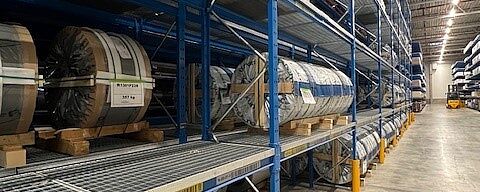
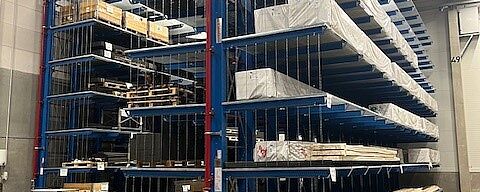
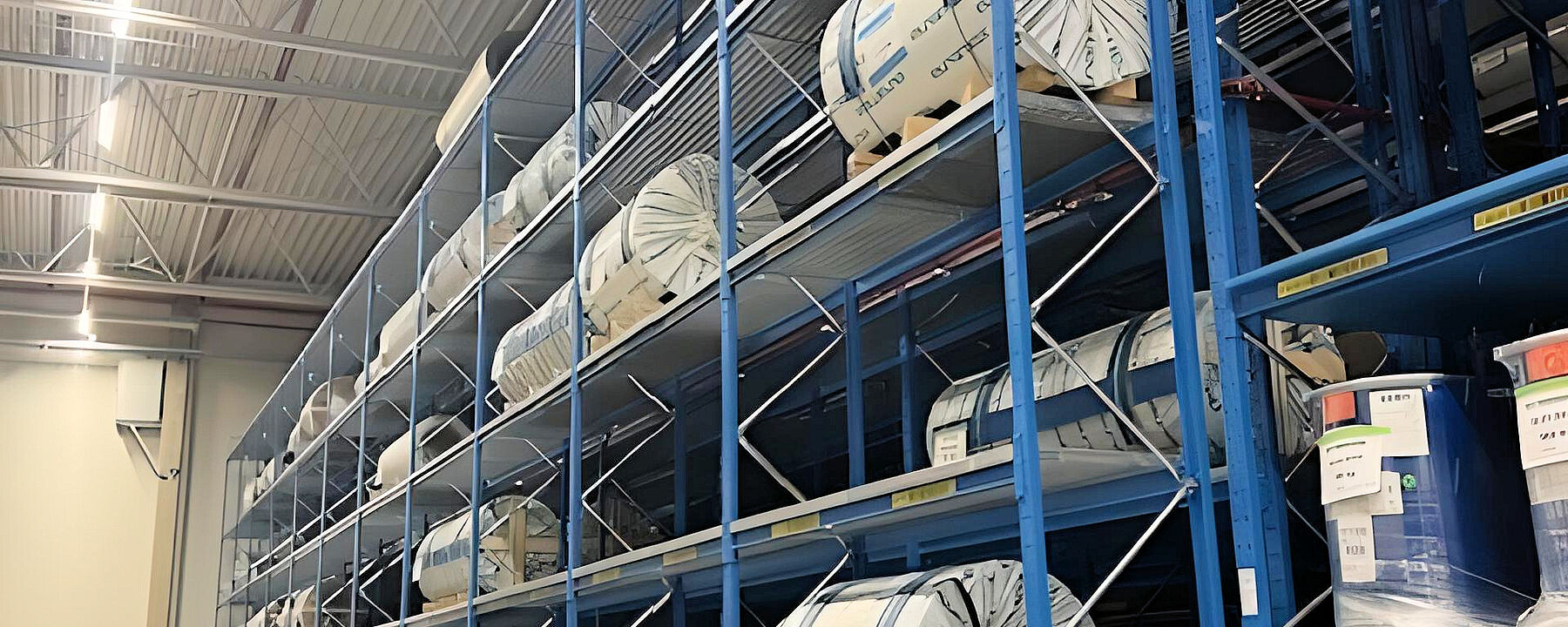
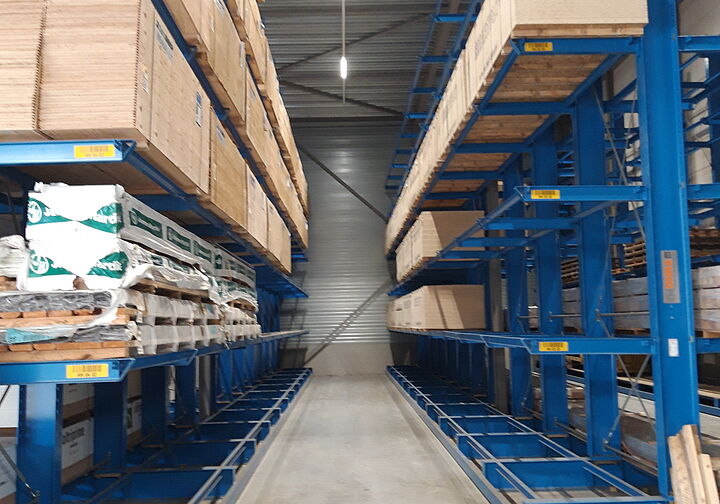
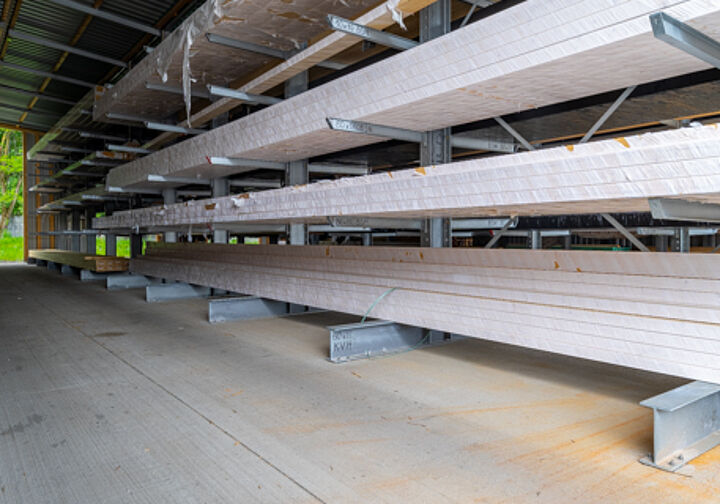
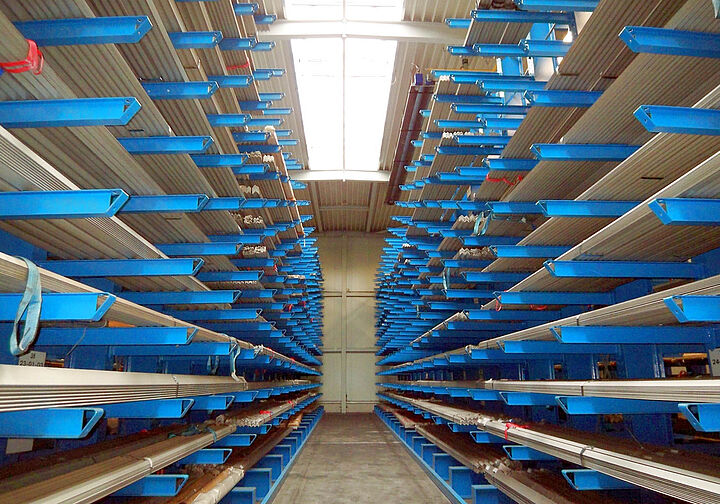
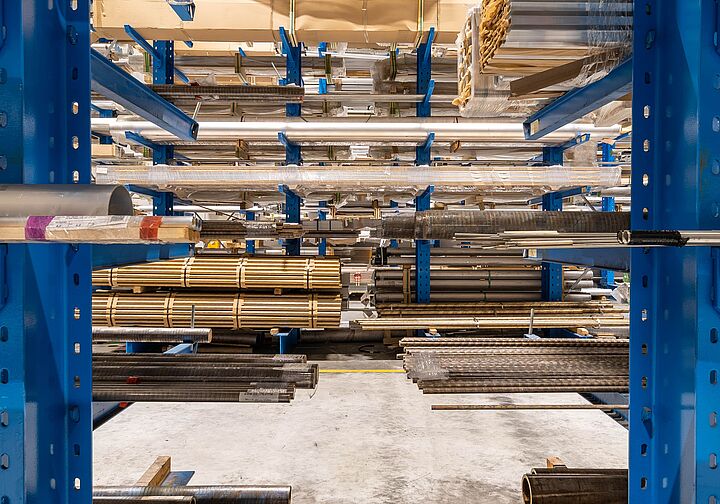
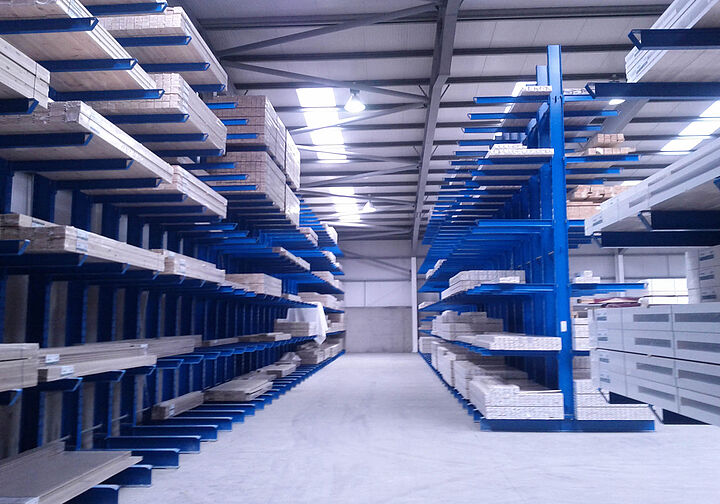
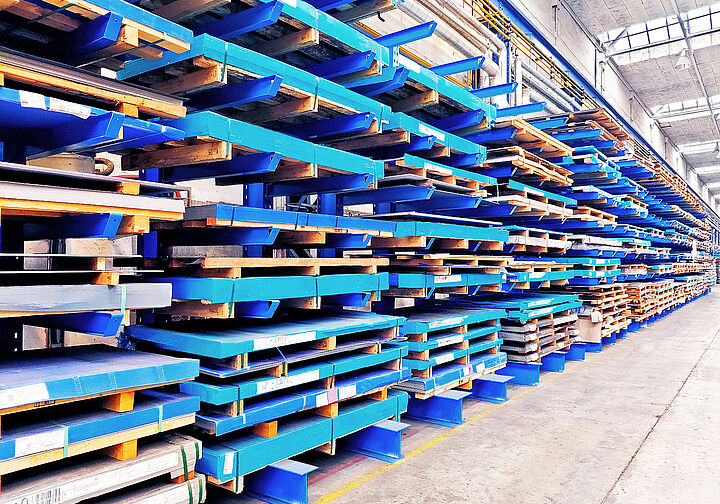
The mix of cantilever and pallet racking enables the storage of materials as diverse as adhesives, aluminium and GRP coils, plywood packages, PVC flooring or wooden and polyurethane foam strips. One of the advantages of OHRA shelving, which is made of hot-rolled steel profiles, is its high load-bearing capacity.: At Knaus Tabbert, for example, the cantilever racks carry up to 12 tonnes per upright, and the load capacity of a single cantilever is up to 1,000 kilograms - even at the highest storage level at a height of 7.5 metres. The GRP coils weighing up to 1.2 tonnes and the sheet metal coils weighing up to 1.8 tonnes are stored in pallet racks. Mesh shelves allow flexible storage regardless of the format of the coil loading aids. In the cantilever racks, too, mesh shelves sometimes ensure that a wide variety of containers and load carriers can be stored.
Space-saving integrated fire protection
Due to the items stored (wood, adhesives, plastics), the warehouse is categorised in a very high fire protection class. Accordingly, the shelves had to be comprehensively equipped with sprinkler systems. OHRA offered a flexible solution, particularly for cantilever racking: Two 80-millimetre holes were drilled in each of the uprights, through which the cables of the fire protection systems could be routed. This solution not only proved to be particularly space-saving, but the pipework is also well protected against damage.
6 photos
 6 photos

 7 photos

 8 photos

 3 photos

 3 photos
